Palm Tree Trimming in Fremont and Hayward, CA
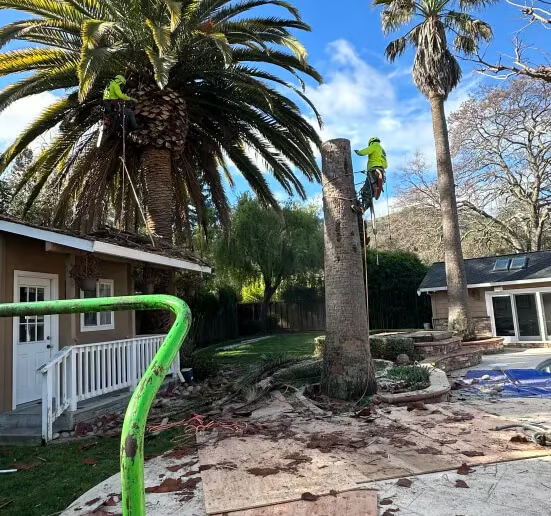
Palm tree trimming removes dead fronds, seed pods, and loose material that can fall or collect around your property. Golden State Tree Care trims and skins tall palms in Fremont, Hayward, and the East Bay. Our climbers assess access and condition before work, and every job starts with a free on-site estimate.
Call (510) 876-4114Why do palm trees need trimming?
Palms do not grow or respond to cuts like branching shade trees. Most of the useful maintenance happens at the crown, where old fronds attach. Trimming can address several practical concerns:
- Dead fronds that hang below the canopy or drop onto roofs, cars, walkways, and patios.
- Seed pods and fruit stalks that create litter, attract unwanted pests, or add weight to the crown.
- Loose frond bases and accumulated material that can shelter pests when left unmanaged.
- Dry, hanging fronds that pose a falling-frond safety risk near structures and walkways.
- Green fronds that interfere with a structure or view, removed selectively rather than cutting away healthy growth unnecessarily.
- Controlled lowering of fronds and complete cleanup of the work area.
A palm's growing point is at the top of the trunk. Cutting into that point can kill the palm, so palm trimming is not the same as topping or crown reduction on another tree.
Which palm types do we trim?
The species affects the equipment, climbing plan, and amount of material that comes down. We identify the palm and look at the crown before agreeing on the scope.
- Mexican fan palm: tall, slender trunks and old fronds that can form a hanging skirt. Access and a safe lowering zone matter when the palm stands beside a home.
- Canary Island date palm: a massive crown with heavy fronds and fruit stalks. Controlled lowering and thorough cleanup are important because the material is bulky and has sharp parts.
- Queen palm: a smoother trunk with arching fronds and seasonal fruit. Trimming usually focuses on dead or declining fronds and unwanted seed stalks while preserving healthy crown growth.
How do we handle safety and cleanup?
- Walk the property with us. Show us each palm, nearby structures, gates, slopes, and anything beneath the crown. Mention previous climbing or skinning work if you know it.
- Agree on trimming, skinning, or removal. Your free on-site estimate identifies the palms and the material to be removed. We discuss whether old frond bases should stay or be cleaned from the trunk.
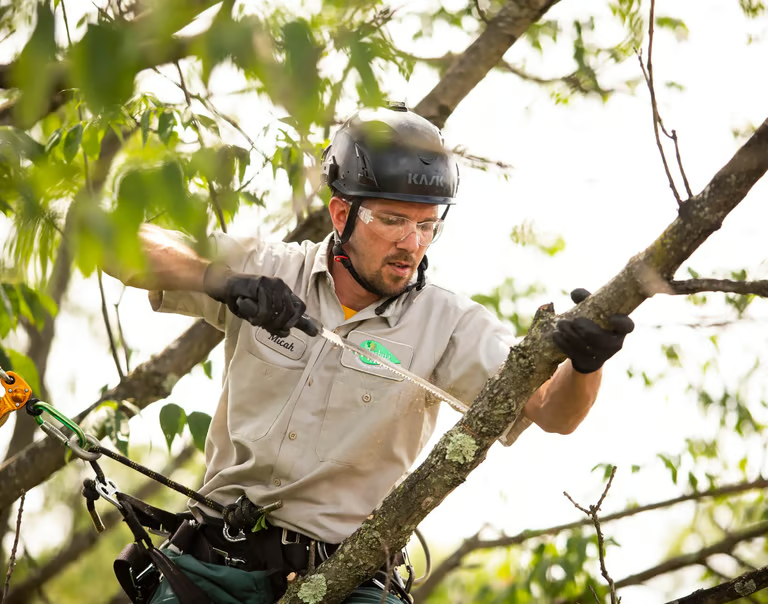
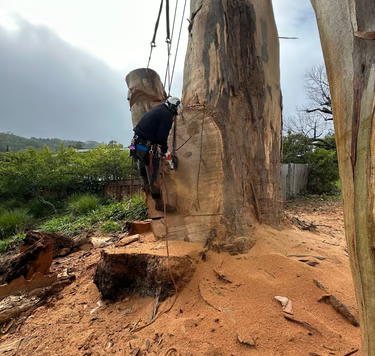
- Set up a controlled work area. Keep people, pets, and vehicles away from the drop and lowering zones. Our climbers use appropriate access and rigging for the palm and site.
- Remove the selected material. Fronds and seed stalks are cut and managed so they do not fall freely onto vulnerable areas. We avoid unnecessary cuts into living tissue.
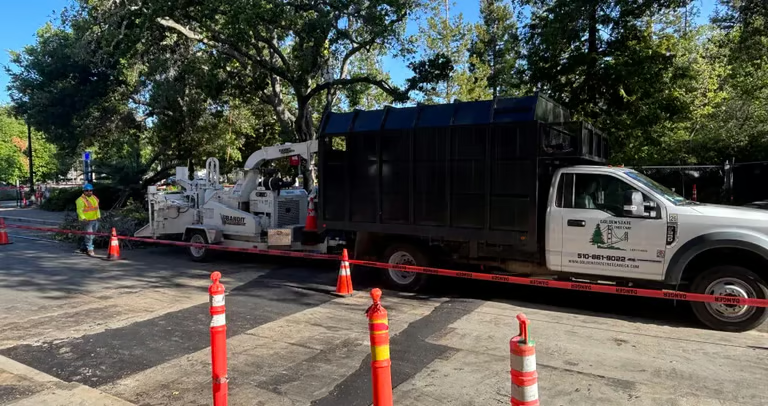
- Haul debris and rake the site. Fronds are stacked, chipped where suitable, or loaded for haul-away. We clear the agreed work area and review any remaining trunk or stump concerns with you.
Do you need approval before palm work?
Permit questions depend on the property and the palm's location. A privately owned palm is different from a tree in the public right-of-way, and an approved landscape plan or HOA may add separate requirements.
Check current local guidance before removal or major work. We provide permit assistance and can include photos and a clear work description with your project information.
We provide tree permit assistance. Read our tree permit guide for Fremont, Hayward and nearby cities and bring any existing city notices to your estimate.
What is the difference between trimming and skinning?
Trimming removes selected fronds and seed stalks from the crown. Skinning removes old frond bases from the trunk to create a smoother appearance. They are separate tasks, and a palm can need trimming without needing skinning.
Skinning should remove loose, dead material rather than cut aggressively into living trunk tissue. Overly aggressive work can leave wounds and weaken the trunk's outer protection. We explain the condition of the existing skirt and what can be removed safely.
How often should palms be trimmed? There is no single schedule for every property. Growth, species, fruit production, previous maintenance, and the amount of dead material all matter. Some palms need attention after seasonal seed production, while others can wait longer. We recommend a visit when hanging fronds or pods create a practical concern rather than removing healthy fronds on a fixed calendar.
Our California contractor license number is CSLB #1114033. We are an independent, locally owned company, not affiliated with other California businesses using a similar name.
What does palm and climbing work involve?
What else should you know about palm tree trimming?
How often should palm trees be trimmed?
It depends on the palm's species, growth, seed production, and how much dead material has accumulated. Have the palm assessed when fronds hang down or pods create a hazard or mess. We avoid removing healthy fronds just to follow a fixed schedule.
Do you remove palm trees?
Yes. We provide palm removal as well as trimming and skinning. We assess height, trunk condition, nearby structures, access, and debris handling before recommending a removal method. Ask about stump options during your free on-site estimate.
Is skinning bad for palms?
Not when it is limited to loose, dead frond bases and done without cutting into living trunk tissue. Aggressive skinning can cause damage. Skinning is optional and mainly changes appearance and removes accumulated old material; it is not required every time a palm is trimmed.
Where can you find local information and related services?
Ready for a free palm tree trimming estimate?
Tell us how many palms need work, their approximate height, and whether you want trimming, skinning, or removal. We confirm the scope after visiting the property. For an urgent hazard, call (510) 876-4114 instead of waiting for a form reply.