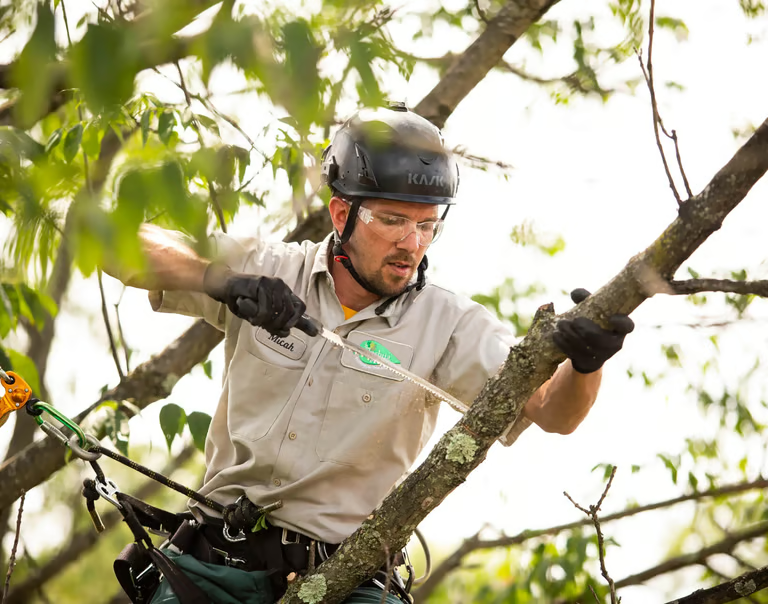
Prune most deciduous East Bay shade trees and apples or pears during winter dormancy, prune spring-flowering ornamentals after flowering, and prune apricots and cherries in dry summer weather rather than during winter rains. Oaks generally need a dry-weather plan and light, species-specific work, while citrus, conifers, drought-stressed trees, and hazardous limbs need separate timing decisions rather than one calendar date for every tree.
Why is there no single pruning month for the East Bay?
Species, flowering habits, tree condition, and disease risk matter more than a universal appointment date. Fremont and Hayward have a mix of deciduous shade trees, evergreen oaks, backyard fruit trees, palms, and conifers. A plan that suits a dormant apple does not automatically suit a cherry or a stressed redwood.
Local exposure matters as well. A sheltered yard near the Bay can have different wind and temperature conditions from a hillside property. Watch the actual tree and forecast rather than assuming that every property in Mission San Jose or the Hayward hills follows the same schedule.
The calendar below is a planning guide, not permission to prune a protected tree. Check species identification, current health, and local approval requirements before substantial work. If you are unsure which tree you have, start with photographs of its leaves, bark, and overall form.
Which seasonal window fits each tree group?
| Tree group | Usual planning window | Main caution |
|---|---|---|
| Deciduous shade trees | Winter dormancy | Separate structural work from urgent hazards |
| Apple and pear | Dormant winter period | Preserve suitable fruiting wood |
| Apricot and cherry | July or August inland; August near the coast | Avoid rain-related Eutypa infection |
| Spring-flowering ornamentals | After flowering | Do not remove flower-bearing growth unnecessarily |
| Oaks | Dry-weather assessment and selective pruning | Minimize wounds and avoid heavy thinning |
| Citrus | After frost risk has passed, when needed | Protect shaded bark from sun exposure |
| Pines and other conifers | Species-specific; often late winter or early spring | Do not assume bare old wood will regrow |
UC Integrated Pest Management specifically recommends the summer windows shown for apricots and cherries in its Eutypa dieback guidance. The other windows describe routine planning and still need adjustment for the individual tree, the pruning objective, and weather.
When should you prune deciduous shade trees?
Winter dormancy is often a useful time for structural pruning because the branch framework is visible without leaves. That makes it easier to identify crossing branches, competing stems, and clearance problems. Work should serve a specific purpose rather than remove a fixed amount from every tree.
For young trees, small, well-placed cuts can help develop a sound structure before branches become large. For mature trees, the goal may be selective deadwood removal or clearance rather than reshaping the whole crown. A winter visit is not a reason to strip out healthy interior branches.
Do not confuse dormant pruning with topping. Cutting major branches back to stubs can create weak regrowth and large wounds. If a tree has outgrown its space, discuss appropriate crown reduction or other options instead of requesting an arbitrary height.
How should you schedule apple, pear, peach, and plum pruning?
For apples and pears, dormant winter pruning is a common starting point. The amount and type of fruiting wood you keep affect the next crop. A backyard tree trained for manageable picking needs a different plan from an ornamental tree grown mainly for shade.
Peaches and plums also need species-specific fruit-tree pruning. Do not remove growth simply because it looks untidy. Ask which wood carries fruit and what the pruning is intended to encourage. Summer work may be useful for size management, but it should not expose formerly shaded limbs suddenly to intense sun.
The UC Master Gardeners of Santa Clara County fruit and nut guidance is a nearby regional resource. Use advice for the actual species and training system, not a generic percentage copied from another fruit tree.
Why are apricots and cherries different?
Fresh pruning wounds can provide an entry point for Eutypa dieback. UC IPM advises pruning apricots and cherries in July and August inland and in August near the coast, allowing wounds time before the rainy season. This is an important exception to the idea that all fruit trees should be cut in winter.
For a Fremont or Hayward yard, choose the relevant coastal or inland guidance with the tree's location and conditions in mind. Aim for dry weather, and do not push elective work into an approaching rainy period just because the fruit has been harvested. Suspected disease needs assessment rather than a more aggressive version of routine pruning.
Tell the crew if branches have died back, leaves have wilted unexpectedly, or earlier pruning wounds look abnormal. Do not assume every dead branch is Eutypa. Several problems can look similar, and the diagnosis affects both cuts and debris handling.
When should you prune coast live oaks?
Plan oak work conservatively, usually in dry conditions, and keep it limited to the actual objective. Mature oaks do not benefit from being opened up simply to look tidier. Removing too much live canopy can change shade, expose bark, and reduce the tree's ability to support itself.
Sudden oak death is another reason to seek species-specific advice. UC IPM's sudden oak death guidance explains that similar symptoms can have different causes and that diagnosis matters. An oak near bay trees or with suspicious trunk bleeding needs assessment, not an automatic calendar-based trim.
Check protected or landmark status before oak work. Fremont and Hayward do not use identical rules, and pruning can be regulated. Read our local permit guide and confirm the scope with the city when required.
What about flowering trees, citrus, redwoods, and palms?
Prune spring-flowering ornamentals after their flowers fade when preserving the display is important. Cutting at the wrong time can remove the buds you wanted to enjoy. Identify whether flowers form on older or current-season growth before choosing a winter appointment for every ornamental tree.
Citrus often needs less pruning than owners expect. Address necessary clearance and dead growth without suddenly exposing the trunk to sunlight. Delay decisions about frost-damaged material until the damage and recovery are clearer rather than removing everything that looks poor immediately after cold weather.
Pines and redwoods need careful, limited cuts. Many conifers will not replace growth removed back into bare old wood. Palms have a different structure again: avoid removing healthy green fronds merely to create a thin appearance. The task and species determine the plan.
Should drought stress or a hanging limb change the schedule?
Yes. Heavy elective pruning can add stress when a tree is already struggling. Discuss water availability, recent construction, root disturbance, and canopy decline before deciding that thinning is the answer. A tree that looks sparse may need less cutting, not more.
A broken hanging limb is a safety issue, not a reason to wait for the ideal season. Keep people away and ask for an assessment. For immediate danger, call emergency services as appropriate; Golden State Tree Care provides 24/7 emergency tree service by phone without a guaranteed arrival time.
How do you arrange a species-specific pruning plan?
Call (510) 876-4114 or request a free estimate for tree trimming and pruning. Tell us the species if known, your location in Fremont or Hayward, and whether the concern is fruit, clearance, health, or safety.
Which facts still need confirmation?
No unverified fee, ordinance number, or legal threshold is stated. The actual tree's species, health, protected status, and suitable appointment window require site-specific confirmation. The table is not a guarantee that all trees in a species group need annual pruning.